Sound vibrational therapy dates way back to the ancients. Tied now more with our understanding of the autonomic nervous system and advances in technology, we can bring in this beautiful therapy approach with the help of instruments (e.g. tuning forks, gongs and Tibetan bowls), binaural beats audio files, or simply our own voice.
Sound vibration benefits:
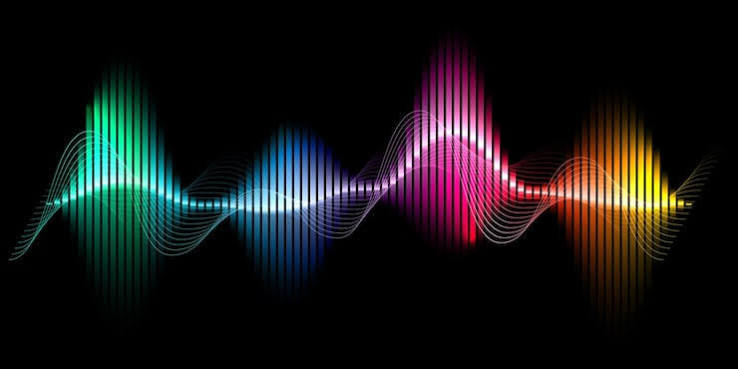
When an object is vibrated, such as a tuning fork, it creates a sound waveform. This waveform has a loudness amplitude, wavelength and frequency (distance/rate) with velocity of speed; measured in hertz. One hertz equals one complete wave cycle in one second, four hertz equals four complete wave cycles in one second, etc.
As our cells absorb and emit sounds, our bodies act as a resonator to sound vibrations. Our vibration sense network is managed by four types of skin receptors (meissner, pacinian, ruffini, merkels), they can feel between 0.3 – 500 hertz. Our acoustic sense hears between 20 – 20.000 hertz.
Sound vibrations help to provide a supportive, energetic link and coordination between the chakras which nourishes the vitality of the physical body. Anatomically, our main seven chakras have an association to our endocrine glands, diaphragmatic structures and nerve ganglia along the spinal cord. For example:
Sound transmits most effectively through solids like our bones; i.e. 5x better than water and 25x better than air. The use of tuning forks, especially on the sacrum, sternum & cranium, has been pioneered by Dr John Beaulieu. He created the use of frequencies and ratios with tuning forks to induce states of relaxation and nervous system balancing, as well as reducing brainwave activities. The ratio of Pythagorean perfect fifth musical interval (C+G) is a prime example.
Binaural beats (two slightly different sound frequencies played in each ear) are used for brain entrainment; accessing and dropping into a brainwaves state, into a state of coherence of where there is balance and synchronicity. Binaural beats have been used to support memory & learning, creativity, nervous system regulation, and bringing in the sense of self in time and space.
Just as our brains are divided into two hemispheres, our bodies are also separated into two bio feedback systems, we have a left and right spine. This can be seen in the Chinese meridian channels.
Traditional Chinese Medicine has had centuries of using vocal sounds to stimulate energy flow and life force through the meridians, and in combination with body movement and the art of Qigong. This is known as vocal toning and has been used extensively across different cultures and ancient wisdoms.
Vocal toning can be heard in Gregorian chanting, Taoist six healing sounds, chakra vowel toning, vocal overtones & harmonics chanting, and throat-singing from the Tibetan monks, Mongolians & Tuvans. It uses the resonance frequency principle - localising the specific resonance of tones in different parts of the body, can cause that which was vibrating out of harmony to come back into alignment.
Vocalisation can help to release pain. It is innate within use to groan when we stump our toe or when we have stomach pains.
Humming is known to release melatonin and spike nitric oxide. Melatonin regulates the body’s circadian rhythms and enhances sleep. When nitric oxide is spiked the body and brain receives more oxygen.
To help ourselves to come into ventral vagal homeostasis, humming a rhythmic melody has an up regulating effect on the nervous system to bring in more energy. Whereas, humming a long single tone can down regulate the nervous system for a more calming effect.
The vibrational effect of sound gently vibrates and massages the internal organs, clears stagnation and stale energy from the body, and harmonises the emotions to create a state of inner peace.